
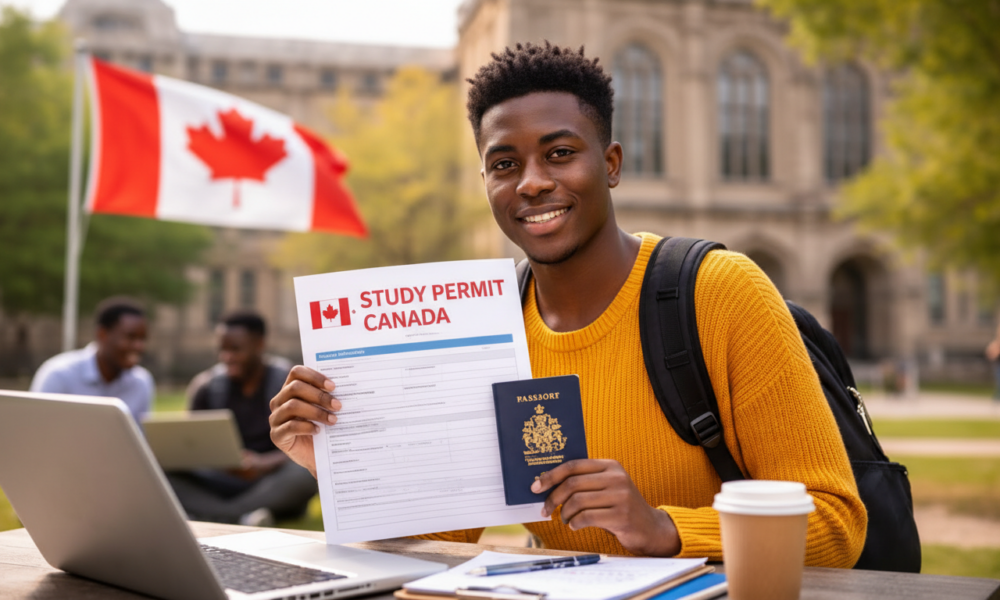
How to Obtain a Student Visa for Canada : A Complete Guide
Canada consistently ranks among the world’s top destinations for international students. Its world-class universities, multicultural environment, and post-graduation opportunities make it an attractive choice for thousands of young people every year. But before stepping into a Canadian classroom, there is one essential document you need to secure: the study permit. A poorly prepared application, however, can quickly lead to a refusal which is why understanding the process from start to finish is absolutely critical.
1) What Is a Canadian Study Permit?
A study permit is an official document issued by the Canadian government that allows a foreign national to study at a recognized Canadian institution for a defined period of time.
A few important distinctions to keep in mind:
- A study permit is not a visa depending on your nationality, it may be accompanied by a visitor visa or an Electronic Travel Authorization (eTA)
- In most cases, you must already have been accepted by a Canadian school before you can apply for a study permit
2) Main Eligibility Requirements
To qualify for a study permit, you will generally need to meet the following conditions:
- Hold a Letter of Acceptance (LOA) from a recognized Canadian institution
- Demonstrate that you have sufficient funds to cover tuition fees, living expenses, and round-trip transportation
- Show that you intend to comply with all conditions of your stay
- Be in good health a medical examination is often required
- Have no inadmissibility issues related to criminal history, security concerns, or other factors
3) Step-by-Step Application Process
Step 1 Choose Your Program and School
Your first move is to identify a program that aligns with your academic background and career goals, and to ensure the institution is a Designated Learning Institution (DLI) a school officially approved by the Canadian government to host international students.
Step 2 Obtain Your Letter of Acceptance (LOA)
Once you have been admitted to your chosen program, the institution will issue your Letter of Acceptance. This document is the cornerstone of your entire application without it, the process cannot begin.
📌 Studying in Québec? Don’t forget that you must first obtain a Certificat d’acceptation du Québec (CAQ) from provincial authorities before applying for your federal study permit.
Step 3 Prepare Your Financial Proof
This is arguably the most scrutinized part of your file. You must clearly demonstrate:
- Where the money comes from (employment income, family support, scholarship, etc.)
- That the funds are readily available
- That your study plan is financially realistic
Vague or unsupported financial documents are one of the leading causes of refusal.
Step 4 Submit Your Online Application
Most study permit applications are submitted through the IRCC (Immigration, Refugees and Citizenship Canada) official portal. You will be required to upload your forms, supporting documents, and pay the applicable processing fees.
Step 5 Biometrics and Medical Examination
Depending on your country of origin, the nature of your program, and the length of your stay, IRCC may request:
- Biometrics (fingerprints and photograph)
- A medical examination conducted by an approved panel physician
Step 6 Wait for a Decision
If your application is approved, you will receive a Port of Entry (POE) Letter of Introduction. The actual study permit will then be issued upon your arrival in Canada by a border services officer.
4) Key Documents to Prepare
A well-organized, complete file speaks volumes about your seriousness as an applicant. Here is a general checklist of commonly required documents:
- Valid passport
- Letter of Acceptance (LOA)
- Financial proof (bank statements, income records, sponsorship letters, etc.)
- Study plan / letter of explanation
- Academic diplomas and transcripts
- Curriculum vitae (CV) depending on your profile
- Civil status documents (if applicable)
- Police clearance certificate (if applicable)
- Medical examination results (if required)
💡 Pro tip: clear, well-labeled PDF documents and a logically structured file can make a significant difference in how your application is perceived.
5) Common Mistakes That Lead to Refusal
Knowing what to avoid is just as important as knowing what to include. The most frequent errors that result in a denied application are:
- A study project that lacks logic or is poorly explained
- Insufficient or unjustified financial proof
- A vague or too-brief explanatory letter
- Incomplete documents or translations that don’t meet official standards
- Inconsistencies between information provided in forms and supporting documents
- Failing to demonstrate a genuine intention to respect the conditions of the stay
6) Tips to Maximize Your Chances of Approval
- Select a program that makes sense with your academic and professional background
- Write a clear, credible, and detailed study plan
- Provide solid, traceable financial evidence
- Organize your documents carefully use clean PDFs with descriptive file names
- Double-check every piece of information for accuracy and consistency before submitting
- Respect all IRCC deadlines and additional requests without delay
Final Thoughts
A Canadian study permit is far more than a bureaucratic hurdle it is your gateway to one of the world’s most respected educational systems and a potential springboard toward a bright professional future. That said, success hinges almost entirely on the strength of your application: a coherent study project, solid financial backing, and meticulously prepared documents. If you are unsure about any step of the process, seeking professional guidance can help you avoid costly mistakes and present the most compelling case possible to immigration authorities.
Auteur/autrice

Québec Unveils Its Immigration Planning.5 juillet 2025
From Application to Arrival: Your. 6 septembre 2025
Related Blogs
Québec Unveils Its Immigration Planning for 2026–2029: What.
On November 6, 2025, just two days after the federal government released its own immigration targets, the province of.

PSTQ: 2,549 Invitations Issued in January as Selection.
Québec’s immigration system is entering 2026 with a clear sense of direction and an increasingly refined set of tools.